SAVE HIV FUNDING CAMPAIGN RESPONDS TO TRUMP ADMINISTRATION’S FAILURE TO ACKNOWLEDGE WORLD AIDS DAY, ANNOUNCES A NATIONAL WEEK OF ACTION
WASHINGTON, D.C – MONDAY, DECEMBER 1, 2025 — In observance of World AIDS Day, taking place today, December 1, the #SaveHIVFunding campaign announced the kick-off of a national week of action, including the release of a national Action Alert resource hub, and a refreshed list of HIV Funding Fast Facts for journalists, creators, and advocates reporting on World AIDS Day this year.
Save HIV Funding World AIDS Day Toolkit HERE
For the first time since 1988, the U.S. government will not commemorate World AIDS Day.
With very little explanation and almost no lead time, it appears that the Trump Administration has decided to break with nearly 40 years of bipartisan precedent. In doing this, the administration also seems to break with President Trump himself, who, in 2019, called for the establishment of the Ending the HIV Epidemic initiative, which led to a stunning 21% decline in new infections in America’s most affected jurisdictions.
In response, the organizers of the Save HIV Funding campaign have provided the following statement: “This administration’s silence on World AIDS Day is more than symbolic — it reinforces an ongoing pattern of attacks on HIV programs and erodes decades of bipartisan leadership. While science, the community, and history are on our side, along with several members of Congress, the billions in cuts to global and domestic HIV requested by this administration would devastate the effective HIV programs that both Congress and the community have championed. Conversely, the bipartisan approach proposed by the Senate would maintain and protect HIV programs. At the same time, the House majority has called for $1.7 billion in funding cuts that would dismantle decades of progress and put millions at risk of losing access to life-saving prevention, care, and treatment. This moment demands courage, clarity, and accountability. We call on the White House and House leaders to reverse course and support the bipartisan Senate FY26 funding bills. Congress and the Administration must protect the HIV programs that keep families and communities healthy nationwide.”
A NATIONAL WEEK OF ACTION
As part of the National Week of Action, the Save HIV Funding campaign will uplift and coordinate with local advocates in at least 12 states — Alabama, Colorado, Florida, Georgia, Louisiana, Michigan, Minnesota, Mississippi, North Carolina, New York, Ohio, and Texas — to amplify frontline programs, local health providers, and community organizations that proposed federal cuts to FY26 funding for HIV programs would directly impact.
Advocacy efforts will include:
- State-specific activation days highlighting local HIV data, health-care impacts, and community-based stories from each of the participating states.
- Grassroots mobilization through state partners to bring the urgency of funding threats directly to congressional offices.
- In-person and virtual events, including town halls, site visits, briefings, community panels, and social-media activations organized with advocates, health-care providers, and people living with HIV.
- Story-sharing campaigns featuring impacted communities in each state to illustrate the real-world consequences of federal cuts.
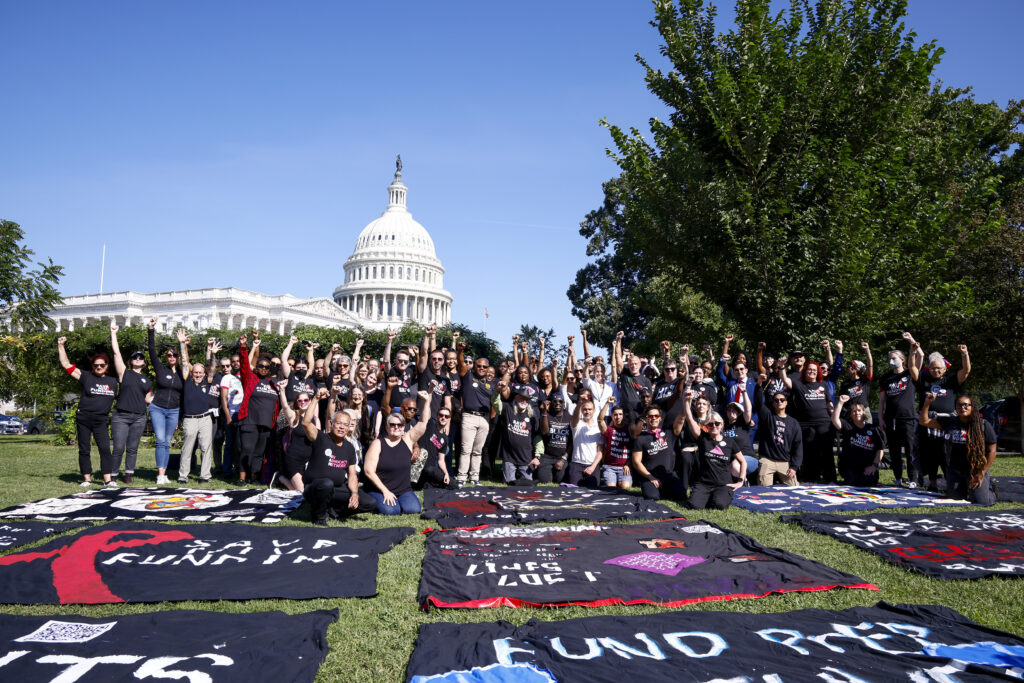
- Display of individual panels from the #CutsKill Quilt and other visual storytelling initiatives in key locations in local communities to amplify the message that cuts to HIV programs carry human cost.
#CUTSKILL QUILT RETURNS TO CAPITOL HILL
As part of the day’s observance on December 1, part of the #CutsKill Quilt — a community-developed installation underscoring the real-life risks of federal funding cuts — will be displayed in the Rayburn House Office Building Foyer. The installation highlights messages from across the country that illustrate how critical HIV funding is to families, communities, and public health nationwide.
Following December 1, panels from the quilt will be displayed by both Democratic and Republican congressional offices to underscore support for people living with and vulnerable to HIV and the need to protect and maintain federal funding for HIV programs.
HIV FUNDING FAST FACTS
To support reporters covering the urgent policy landscape, the campaign is releasing the following Fact Sheet outlining the impact, scale, and human stakes of ongoing funding threats. Save HIV Funding reminds journalists and storytellers reporting on World AIDS Day to include the state of HIV Funding in their storytelling this year:
- Federal HIV programs have more than 35 years of bipartisan support: In 2003, President George W. Bush created PEPFAR (the President’s Emergency Plan for AIDS Relief), which has saved 25 million lives worldwide. Domestically, Bush signed reauthorizations of the Ryan White CARE Act, expanding federal support for HIV care. Protecting HIV funding has historically been a bipartisan commitment to public health and stability.
- Federal HIV programs are cost-effective: Every $1 invested in HIV prevention saves the health care system $3 to $7 in future treatment costs. Cuts would increase long-term spending.
- Medicaid is the largest source of coverage for people with HIV in the U.S., covering roughly 40% of people living with HIV. Medicaid expansion has been associated with a 33% increase in PrEP prescriptions. Cuts to HIV funding would have ripple effects across the entire Medicaid system, limiting access to care for millions of low-income Americans.
- HIV care is part of the U.S. health care system: Federal HIV funding supports access to preventive care, primary care, mental health services, housing, and medications. Cutting these funds would destabilize programs millions of Americans depend on — including those living with chronic conditions, low-income families, and uninsured people.
- Over 1.2 million Americans are living with HIV, and over 500,000 rely on federal programs like the Ryan White HIV/AIDS Program for lifesaving medication and care.
- HIV prevention funding protects everyone: The federal government funds access to PrEP (pre-exposure prophylaxis), a daily medication that reduces the vulnerability of HIV by 99%. Rolling back funding would increase new HIV cases and long-term costs to the health care system.
- HIV funding is about more than one disease: These programs create a blueprint for coordinated, federally funded responses to health crises — from the opioid epidemic to COVID-19. Gutting HIV funding would weaken America’s preparedness for future public health threats.
- HIV funding protects vulnerable communities: Black and Latine communities account for more than 65% of new HIV diagnoses. Protecting these funds is about protecting racial and health equity.
Additional State-by-State Resources & Fact Sheets HERE
Save HIV Funding World AIDS Day Toolkit HERE
Press Contact:
Morrison Media Group:
About the Save HIV Funding Campaign:
Launched in 2023 by PrEP4All, AVAC, and the HIV Medicine Association in partnership with the Federal AIDS Policy Partnership, the Save HIV Funding campaign is supported by over 150 national and local organizations. The campaign began in response to proposed Congressional cuts to federal HIV programs and successfully helped avert $1.5 billion in domestic HIV funding cuts.
In early 2025, the campaign expanded in response to the Trump Administration’s escalating efforts to dismantle essential HIV services and infrastructure. Today, Save HIV Funding continues to mobilize advocates, patients, healthcare providers, and public figures to ensure access to lifesaving care for everyone impacted by HIV.