Ahead of World AIDS Day, Save HIV Funding Campaign Releases Updated Funding Fast Facts, Announces National Week of Action, Urges Congress to Reject Devastating Cuts to HIV Prevention and Treatment Programs
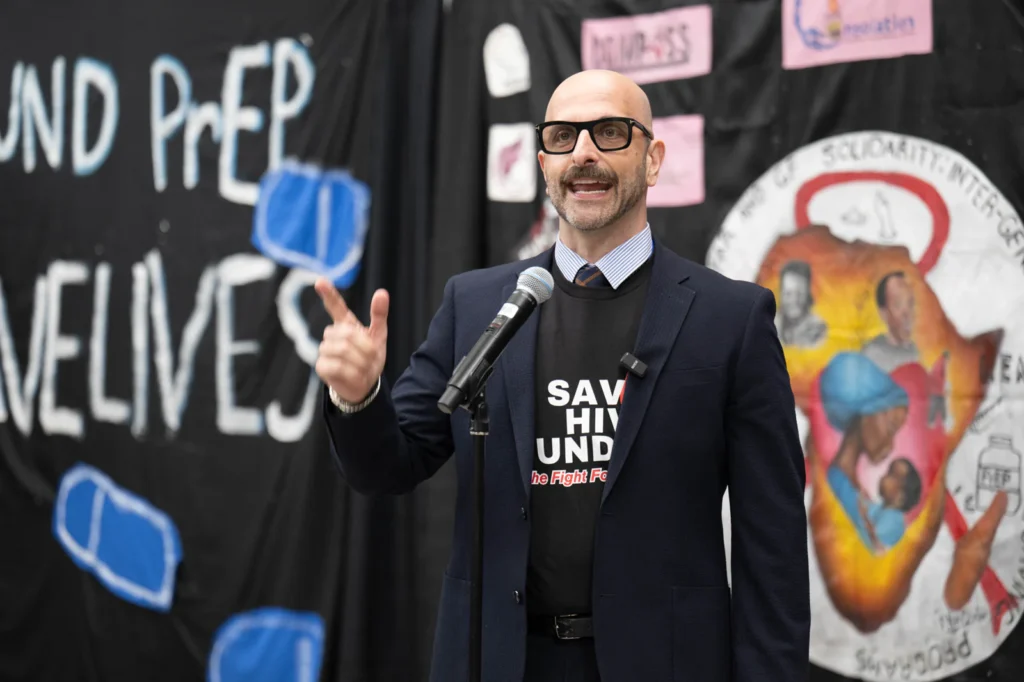
Photo Credit: Kelly Price Photography; Dr. Demetre Daskalakis (formerly of Centers for Disease Control and Prevention) speaking at the #CutsKill Unveiling in Atlanta, Press Release courtesy of Morrison Media Group.
WASHINGTON, D.C, TUESDAY, NOVEMBER 25, 2025 — In advance of World AIDS Day, taking place on December 1, the #SaveHIVFunding campaign has released a newly updated Action Alert, and announced a coordinated national week of actionwith partner organizations to call on Congress to reject proposed federal cuts that would jeopardize vital HIV prevention, care, and treatment programs. Save HIV Funding encourages journalists, creators and advocates reporting on World AIDS Day this year to include the story and narrative around the current state of HIV funding and has provided a refreshed list of HIV Funding Fast Facts at the end of this release.
Since its launch, Save HIV Funding has operated as a convener, bringing together HIV advocates, providers, researchers, public health leaders, and grassroots organizers across regions and political lines. The campaign mobilizes rapid-response advocacy, community education efforts, storytelling initiatives — including the #CutsKill Quilt — and direct engagement with lawmakers in Washington, D.C.
This year, the campaign emphasizes the stark contrast between scientific progress and political regression. As HIV prevention and treatment tools improve, Congress is considering cuts that would undermine decades of bipartisan investment in HIV care.
As part of the National Week of Action, the Save HIV Funding campaign will uplift and coordinate with local advocates in at least 12 states — Alabama, Colorado, Florida, Georgia, Louisiana, Michigan, Minnesota, Mississippi, North Carolina, New York, Ohio, and Texas — to amplify frontline programs, local health providers, and community organizations that would be directly impacted by proposed federal cuts to FY26 funding for HIV programs.
Advocacy efforts will include:
- State-specific activation days highlighting local HIV data, health-care impacts, and community-based stories from each of the participating states.
- Grassroots mobilization through state partners to bring the urgency of funding threats directly to congressional offices.
- In-person and virtual events, including town halls, site visits, briefings, community panels, and social-media activations organized with advocates, health-care providers, and people living with HIV.
- Story-sharing campaigns featuring impacted communities in each state to illustrate the real-world consequences of federal cuts.
- Display of individual panels from the #CutsKill Quilt and other visual storytelling initiatives in key locations in local communities to amplify the message that cuts to HIV programs carry human cost.
#CUTSKILL QUILT RETURNS TO CAPITOL HILL
As part of the day’s observance on December 1, part of the #CutsKill Quilt — a community-developed installation underscoring the real-life risks of federal funding cuts — will be displayed in the Rayburn House Office Building Foyer. The installation highlights messages from across the country that illustrate how critical HIV funding is to families, communities, and public health nationwide.
Following December 1, panels from the quilt will be displayed by both Democratic and Republican congressional offices to underscore support for people living with and vulnerable to HIV and the need to protect and maintain federal funding for HIV programs.
HIV FUNDING FAST FACTS
To support reporters covering the urgent policy landscape, the campaign is releasing the following Fact Sheet outlining the impact, scale, and human stakes of ongoing funding threats. Save HIV Funding reminds journalists and storytellers reporting on World AIDS Day to include the state of HIV Funding in their storytelling this year:
- Federal HIV programs have more than 35 years of bipartisan support: In 2003, President George W. Bush created PEPFAR (the President’s Emergency Plan for AIDS Relief), which has saved 25 million lives worldwide. Domestically, Bush signed reauthorizations of the Ryan White CARE Act, expanding federal support for HIV care. Protecting HIV funding has historically been a bipartisan commitment to public health and stability.
- Federal HIV programs are cost-effective: Every $1 invested in HIV prevention saves the health care system $3 to $7 in future treatment costs. Cuts would increase long-term spending.
- Medicaid is the largest source of coverage for people with HIV in the U.S., covering roughly 40% of people living with HIV. Medicaid expansion has been associated with a 33% increase in PrEP prescriptions. Cuts to HIV funding would have ripple effects across the entire Medicaid system, limiting access to care for millions of low-income Americans.
- HIV care is part of the U.S. health care system: Federal HIV funding supports access to preventive care, primary care, mental health services, housing, and medications. Cutting these funds would destabilize programs millions of Americans depend on — including those living with chronic conditions, low-income families, and uninsured people.
- Over 1.2 million Americans are living with HIV, and over 500,000 rely on federal programs like the Ryan White HIV/AIDS Program for lifesaving medication and care.
- HIV prevention funding protects everyone: The federal government funds access to PrEP (pre-exposure prophylaxis), a daily medication that reduces the vulnerability of HIV by 99%. Rolling back funding would increase new HIV cases and long-term costs to the health care system.
- HIV funding is about more than one disease: These programs create a blueprint for coordinated, federally funded responses to health crises — from the opioid epidemic to COVID-19. Gutting HIV funding would weaken America’s preparedness for future public health threats.
- HIV funding protects vulnerable communities: Black and Latine communities account for more than 65% of new HIV diagnoses. Protecting these funds is about protecting racial and health equity.